Showing posts with label portfolio. Show all posts

Friday, 16 February 2018

JC Fund and JC Options Fund - personal review

The Singapore and Hong Kong markets closed today at 12pm and I was looking at the results of Thaibev. I knew the acquisitions will make the results look nasty but did not expect to be this bad. I sat there thinking about the next 1-2 years outlook for Thaibev. I am worried of its over leveraged position and rising interest rate environment. In the short run, the stock will not perform well but the business is consolidating to grow from strength to strength.

I was wondering why I chase after bad investment such as HPH Trust USD, double down on my losses and did not cut this counter last year. In fact, there was a window of opportunity when it was even profitable.

I was thinking of this recent market correction when there were opportunities for me to switch out laggard IBM shares to acquire AAPL shares. I done my homework and I was convinced that AAPL was mispriced. Why I did not do it? There are a few other companies which provide that window of opportunity to switch and move my money into a faster lane. I seem to prefer status quo (maybe I have a fear of losing money) or I have no confidence of my own valuation?

My portfolio consists of mainly dividend stocks and only 1 growth stock. I am playing a defensive role here. Maybe I believe that now I am jobless and there's no income coming in from my side, I need income from dividend. I just want to be prudent and to be paid while waiting. I think everyone has different investing approach and as long as the same objective is been achieved, it does not matter which route you take. I am just thinking whether I should move away from net-net stocks which sometimes can be value traps.

As of 14th February post market share price of AAPL was USD 168.93, maybe on the 16th February, my AAPL sell put options will expire with share price above USD 170 (20th February when I review this, the option expires worthless and share price closed at USD 172 on 16th February 2018). On hindsight, I could be profitable instead of pocketing the huge losses. However I should remember the important lesson learnt. What if a huge bear wakes up and share price drops by 50%? Will I have money to top up margin maintenance call? Nope. It will be a worse scenario resulting into a very unhappy Chinese New Year.  Thou never gamble with leverage and trade within your cash and cash equivalent. Always follow the checklist. If it is a huge gain, there is bound to be another larger loss later on (this applies to me, I suffered twice on this - a total loss of USD 32k on two trades). If I follow a small gain of 1% per month, this will be a safer approach in the long run.

Overall, as of 15th February, JC Fund and Option Fund portfolios have recovered to a neutral position with no paper gain or losses. Let's think of a strategy on how to shift the stocks around and what sort of mistakes to avoid in the future.
  • Rebuild watch list - understand beta of each stocks, moat, intrinsic value and margin of safety
  • Re-balance portfolio towards end of Q1 and review again in Q3.
  •  Withdraw some profit every quarter to spend on the family

Monday, 12 February 2018

Finding Value in Today's Market


We are officially in a correction which can go up to 19% drop in terms of share prices. If the market price drops >20%, then we are into a bear market. What should value investors do at this moment?

Let me share some of the thought processes:

1) The Sale that you have been waiting for is here, it does not mean that you need to enter the market but with cash seating on the sideline means you can deploy them when the stock price comes to your ideal price range. This means that you have done your homework, created your watch list of stocks and understand what are the intrinsic values. I am going to deploy the last 100k into different tranches to absorb China A50 ETF and Tracker Fund to focus mainly on China and Hong Kong market. The dividend will allow my wife to settle some expenses such as charity and bills. I will not deploy margin money for correction. I will only deploy it when there is a bear market and there is a strategy to peg to margin to make it work.

2) Investor Mindset - Investing is all about managing your emotions. That is the reason why the gurus always say a good temperament is essential for investment. Everyone likes to think they can be a contrarian but when the fire is here, everyone shit in their pants. Especially with the past 1 week, there is so much volatility in the market, the market can drop 1000 points on alternative days, you will not know how to react. I will like to take this as a form of training. You need to be calm and see this as an opportunity to re-enter the market. We need to control our natural human instinct to flee when there is danger and avoid the herd mentality to follow everyone to sell when the market prices hit low.

3) Be like an ostrich - I recalled just 2 years ago when I thought with the rising interest rates environment, OCBC should benefit from it and I took a huge stake in OCBC (about 30% of my portfolio back then). Then OCBC started to drop till $8+ as Singapore STI took a correction. It was very painful to keep looking at your price and your total portfolio value. The pain of losing money is much more severe than the feeling of winning money.  Prices will not miraculously increase in a downturn just because you keep pressing the refresh button. The only thing that holds is Value which is not based on market pricing. For example, Apple has its ecosystem of products and services in tact and a share price of USD 100 or USD 200 does not affect the business. In a market downturn, people are still buying iPhone X (maybe lesser). Focusing on value instead of just price itself, you can sniff out undervalue stocks and rebalance your portfolio. Mr Market is offering you a good price for these coming few weeks as a form of Ang Bao for Chinese New Year. For example, if you are yield player, Singtel is offering a pretty awesome 5% yield. Unfortunately, I have already deployed my cash into the market but the bulk of SGD 200k is been bet on a specific counter. I was lucky to consolidate the money before the correction into this defensive counter. So far it has corrected 7%. I will switch out to AAPL or a few other stocks depending whether there is sufficient margin of safety.  I have learnt in times of downturn, I will be like an ostrich, I will not check the prices and unrealised profit/losses. I continue to build my stocks watch list.

4) Find a Hobby or Things to do other than spend time looking at the screen - Do something that keeps your mind away from the market. It can be in the form of exercise such as cycling, running, swimming, etc. It can also be working hard at work. It can be spending more quality time with the family.

There are companies which counter the down trend and there are bargains out there. Hope you can find value stocks and enjoy life! Stay healthy, stay wealthy. Health comes first. Do not let the market affect your health. Close the screen and go exercise now!

Sunday, 28 January 2018

How to Invest in an Overpriced Market

What should an investor do when all asset classes appear overpriced? The 10-year US treasury Bond yields about 2.6% which is much lower than the 5% historical average and only slightly higher than the Federal Reserve's 2% inflation rate target. S&P 500 Index has recorded new all-time highs, Hang Seng Index was at a new record high in January 2018 and even laggard Straits Times Index is close to all time high of 3800.

The cycle adjusted price/earnings ratio (CAPE) - the valuation metric which predicts future 10 year rate of return is about 34. That's one of the highest valuation exceeding only readings in 1929 and early 2000, prior to crashes. Today's CAPE suggests that 10 year equity rate of return will be barely positive. Do you believe that this time it will be different?

A corollary is that no one can consistently time the market. Proper market timing involves making two decisions - when to get out and when to get back in. Timing both correctly is virtually impossible. Investors who try to outsmart the market more often get it wrong than right.
What can an investor do to minimize this risk? Here are some options:

Rebalance 
A simple portfolio that started out 2009 with 60 percent in US stocks and 40 percent in US bonds would now have close to 80 percent in stocks and 20 percent in bonds. You can rebalance and set target asset allocation weights and periodically rebalance back to your preset amounts on occasion.

Overbalance
If you are worried about stocks, you can shift money to underperforming assets. Value stocks have underperformed growth stocks by more than 3 percentage points annually over the last decade. US stocks have outperformed International stocks which include European stocks and emerging markets over the same intervals. Hence, investors looking at mean reversion could allocate more of their portfolios to value and international stocks.

Avoid complexity and shift to Cash/Bonds
There are plenty of complex hedging techniques available but require incredible foresight to work. It is difficult to time the trades, volatility and costs can eat into your returns. The easiest way is to simply take less risk by raising more cash or invest in high quality bonds and lesser equities. By holding enough cash on hand will give you the peace of mind in knowing you can meet your expenses in a downturn is worth more than a few percentage points in returns. This money is your war chest which you can use in the next round of downturn.

Buy and Hold
Being a long term investor is easy when the market price is going up but when it is coming down, it is a test of grit and temperament. Beside been emotionally challenging, it is a great way to avoid transaction cost and market timing errors.

Use momentum
Momentum is based on the idea that asset that performs well will continue to perform well and vice versa for a short period of time because market is irrational in the short run.

Diversification
Staying the course in a broadly diversified portfolio is the best strategy when all asset classes appear overpriced. If rebalancing is required to constrain portfolio risk, consider good quality dividend stocks. With a yield of about 5%, it offers some return even when the market turns against you.

Each of these approaches has its own drawbacks and limitations. The best investment strategy is one which will suit your temperament and you stick to it.


Saturday, 27 January 2018

JC Options Fund Update 27 Jan 2018


Just now, I experience a moment of fear. I remember recently in 2017, I experienced a fearful incident. I took the staircase in International Plaza on the 26th floor to 25th floor then I tried to open the door but it was locked from inside. I started to descend to the next level and try to open the door. Again it was locked. Then I tried the next floor and the next one. Fear started to creep in when I went to 20th floor. I was flustered and worried what if nobody realized that I am missing as it was a Sunday. Then I calm myself, took a breather and continue to walk downstairs and finally the door was able to open on the 6th floor which leads to the car park.

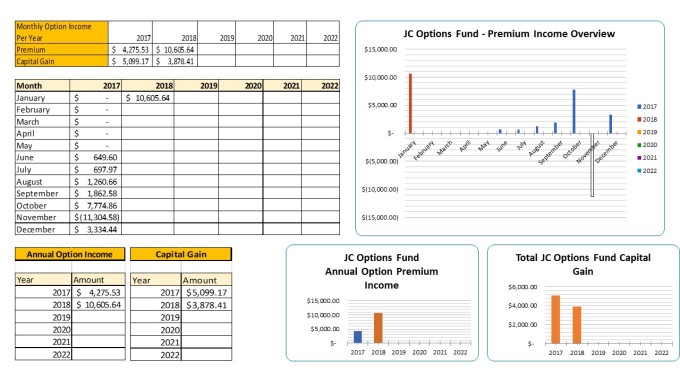
My fear earlier was when I did a cut loss on all my TLT and IEF options. It was very painful and scary. I just frantically pressed the right click button on the mouse and execute the close position order. I will explain my rationale why I need to shift out from bonds in another post. For capital loss, it was - USD 4,304.95 and premium loss was - USD 433.88. OUCH! To justify for the losses, I chased after a volatile stock AAPL and sell put on it to gain the premium of USD 9,189.54. I think it is going to be shitty as 1st February after market close, the earnings is going to be released. Yes, I did not check the earnings date again. This is the type of situation which you can only pray that the earnings is good and you get to keep the differences and free up your capital. Worst case scenario, it is going to be a thick white bar downwards like the month of November 2017 as shown in the above figure. If it happens, the thick white bar is going to be very scary.

Sunday, 31 December 2017

Reflections 2017 and Plans for 2018

Reflections on 2017
This was the most turbulent year for me as I experienced retrenchment twice in a single year. Nevertheless, it was one of the most prosperous year. Looking at the start of 2017, JC Fund was standing at SGD 870k in total for cash and cash equivalent and at the end of 2017, JC Fund is at SGD 1,200k. I am estimating the capital gain (inclusive of dividend) to be about SGD 170k. Total return is approximately 19.5%. I took a very "kiasee" (afraid to lose) approach, trying to be conservative when everyone is aggressive. I hoard cash and re-balance portfolio. I don't think 2018 will be a stronger bull and I will be happy to consistently do a 10% return on JC Fund.

We have moved to our house for almost a year and we have fully redeemed the mortgage loan. It feels good to be debt-free as we do not have any stress on liability. At certain times, without the fear of a mortgage to pay for, I can raise my voice at my immediate bosses when I do not agree with them. Maybe that is the reason I will be seating at home in April 2018 without a job haha. Please do not follow what I have done unless you want to lose your rice bowl too. 

My priority towards work has also changed as I want to focus more on creating our wealth as we have our first pot of gold. I feel that I do not want to create assets for others by working as an employee. As an employee, I will be building their empire, making them wealthier at the expense of my time and health. 


Time is the most scarce element. We have limited time on this Earth. Please stop thinking linearly, exchanging time for money. Think non-linearly. Think leverage. 

My mentor approached me after knowing that I was retrenched on 22nd December 2017. He offered me the option to join him to start a hedge fund. The timeline is to apply for Registered Fund Management License in January 2018.

I am going to pump in 250k for working capital and the remaining JC Fund will be injected into the AUM. I will be one of the founder, taking the role of an investment analyst.

Currently we started discussion with fund platforms to understand in depth on the CAPEX and OPEX. My mentor has already started the process to understand various cost half a year ago. 

Next we need to draft out a compliance plan and business plan.

I spoke to my Managing Director on 28th December and he is a personal friend who brought me into the company. His uncle was the one who terminated me. He felt that this hedge fund business is feasible but I need to think of it the internet way where everything is free. He suggest the approach of “You make money then I make money.” 

1) make your business trustworthy- compliance and systems in place to safeguard the investors 
2) run the day to day business smoothly
3) bring in funding
4) continue to perform in terms of portfolio
5) set up processes to create a system

However, today on 31st December 2017, my mentor told me that his return this year is close to 30% after including dividends and his networth is close to SGD 4m. He is thinking of just retiring and manage his own fund. If that is the case, I need to rework my plans for 2018.

2018 Personal Goal
  1. Improve investment skills 
    • Read newspapers, books, articles, scientific/business magazines
    • Key target for 2018 is to finish reading all my books
    • Search and study companies on Qualitative and Quantitative 
  2. Health - Exercise 
    • Skipping x 300 x 3 times a week 
    • 3 x rounds of training cycles x 3 times a week
    • Chin ups x 10-20 x 3 times a week
  3. Friendship 
    • Meet friends to catch up for coffee

2018 Family Goal
  1. Spend time to date wife 
    • Have in-depth conversations
    • Have couple time
    • Plan short trips with wife to nearby getaways e.g. Penang, Bali 
  2. Spend time with ah boy
    • Teach and lead him
    • Introduce him to play group
    • Learn swimming
  3. Family Dinners and Trips 
    • Meals with Parents-in-law
    • Trips with Parents 
    • Monthly dinner with Family

Saturday, 9 December 2017

Portfolio Movement in December

Recently, I have started to accumulate more shares.

I have bought 2,000 shares of L'occitane as I will like to observe how Q4 will affect the revenue. 

I have bought 5,000 shares of SGX at SGD 7.70 and I still don't understand why I cannot wait for a lower price. 

I have bought 10,000 shares of Wilmar at SGD 3.10. 

On Comfortdelgro, acquiring 51% of Lion City Rental (LCR), LCR becomes a subsidiary of Comfortdelgro and LCR's financial results will be incorporated into future CDG's results. I know that both Uber and Grab are burning cash. LCR owns approximately 10,000 cars. Assume SGD 5,000 for capex on each car, this will account for SGD 50m on future capex. With 10 years of depreciation and capex, next few years of financial results will be dragged down.

I was estimating intrinsic value at about SGD 1.90 and now with this acquisition, need to forecast future earnings. Let's take a look at the latest earnings post acquisition. 

I have bought 2 call options on GLD. I am trying to create a 5% GLD 5% IEF 10% TLT for portfolio purpose.

Thursday, 16 November 2017

Deployment of JC Fund

I have been seating down with cash for a long while since probably May 2017 and has not deployed bulk of the cash into other stocks, missing one of the most spectacular bull run. This is the key reason why I have performed poorer than MSCI World Index. Nevertheless, I have achieved what I aim to achieve this year.

Going forward, the return will not be as high as this year, Schroders forecast the next seven MSCI world return will have a nominal 4.2% per annum. Going forward, it will be more challenging to achieve a decent return. 

The US market is all time high, I sold one of the counter and add more to IBM while Warren sold his shares and add to APPLE. I added an ADR China share to the portfolio.

I bought my first European company after it corrected by 10%. 

I redeployed some of the HKD to Welling Holdings, Hang Lung and L'occitane. I did not have time to acquire Welling Holdings as recently work is taking a toll on my time. I only bought 11,000 shares as it is lightly traded before my holiday. While overseas, I realized that Midea is proposing to acquire the rest of the shares to privatize Welling Holdings. This is luck not skill. While on holiday in Hong Kong, I was watching the news and they announced that all the tunnel tolls will be considering a price increase after many years, this is an opportunity to acquire some defensive stock - Cross Harbor Holdings. I was drinking Vitasoy and I googled it. This is an interesting company but overvalued at this current price. I have placed it in my watch list.

Two other companies I need to dig further are China Longyuan and Beijing Enterprise. Time to sleep, the next few days will be crazy working hours and lots of business trips again. 

I am planning to take 2018 to learn how to invest on a full time basis. 


Saturday, 14 October 2017

Alpha Lab Investment Mastermind Group and Revelation

What do you do after work and during your free time determines how successful you will become in life. A few friends who are interested in investing came together on a Saturday afternoon to discuss individual investment approach, circle of competence and various stocks we are interested in. It has been very insightful and always refreshing to meet like-minded friends.

Going forward, we are going to share our individual research so that we can gain access to more good stocks. This can help us expand our warchest of ideas. Then when the opportunity presents itself, we can utilise our warchest of money to respective stocks.

After the event, I had dinner with my friend to catch up on his latest business endeavors. I shared with him our family project which is for my wife to retire in 4 years time. He pointed out that this should not be the goal post but I should look into the definition of financial freedom. 

Financial Freedom is when your passive income exceeds your expenses. 

I explained that my active income from Options Trading has reached about USD 2,500 and I hope to replace my work income so that I can stop working for someone. He reminded me of the original definition of Financial Freedom, I should work on getting the Options Trading income to exceed my total expenses instead.

I came home and reworked my household Cashflow Statement.

Total Monthly Cash Outflow S$6,207

Rental Income S$400
Dividend Income S$3,333 (Assume I deploy S$1m and just 4% yield)
Option Income S$3,712
Total Monthly Alternative Income Inflow S$7,445.83 

Damnit! We are already FINANCIALLY FREE! What a revelation!

Then I should be asking myself what I should be pursuing next - my passion. Recently, I am reading Ray Dalio - Principles and his definition of Work is to do something that you enjoy and be paid for it. Also, who you choose to work with and spend time together at work will determine your happiness.  

*Disclaimer - Option Income needs to be stable at this level. Losses will disturb this equilibrium. At the end, it is still active income. You can consider this as money you put in your Opportunistic Fund.

After thinking through, I will not just throw in my resignation letter on Monday, I will wait at least a few more months to make sure my Options Income can be stable and need to test a crisis model on JC Options Fund.

20/10/2017
Last night, I met up with my trusted financial planner friend. He felt that my definition of Financial Freedom has some room for errors. He thinks that as a family man, my expense is still fluctuating and there is a strong likelihood that it will increase in the near future. This depends on whether I will send my children to enrichment classes and tuition.  His advise is Financial Freedom is not the end goal but the journey matters more. 

His advise is continue to work hard, we are too young to retire, do what you believe in and increase your income level to cater for unexpected situations. 

He showed me his trade of 200 contracts of MOS SP 22. That is USD 440,000! He has many multi-baggers. Wow, the session humbled me. Stay humble, stay foolish, stay hungry!

Sunday, 8 October 2017

Correction

Definition of correction is when the stock price falls 10% from the peak price. Correction usually occurs at least once a year. So far in 2017, I have not experienced a correction or maybe I missed it. 

Nobody can predict with consistency whether a market will rise or fall. The stock market rises over time despite temporary set back. Despite a major drop in a share price correction, one still can emerge with high returns as the share price generally rise higher over time due to inflation. For example, your mixed vegetable rice has increased from S$2.50 in 2015 to $3.30 in 2017. Say a listed company called Ah Boy Vege Rice will record higher revenue from 2015 to 2017 and share price will hit a higher price.

Historically, bear markets will happen every 3-5 years. I am still waiting earnestly for Mr Bear to come by keeping cash. Cash is the lousiest return asset class. Please come fast as I want to deploy my cash. Like all seasons, winter will eventually turn to spring. Bear Market will turn Bull Market. Everything has a cycle.

The greatest danger for an investor is to be completely out of the market. I will always remain invested.

A few reasons why I prefer USA companies.

1) High market cap will reduce market manipulation
2) High volume and high liquidity
3) Market with most research and news coverage
4) US has the most successful global companies
5) Key mover for stock markets
6) Good transparency for companies' corporate governance  

My personal investment strategy follows a pyramid style. The base consists of low risk investments with a diversified stocks in at least 10-15 blue chips companies, in the middle of the pyramid consists of 2-5 growth stocks and at the tip of the pyramid, I am using options trading to increase the return of stocks, high returns with short term trades and hedging purposes through bonds ETFs.

Saturday, 19 August 2017

End of 2nd month JC Options Fund

This is painful. In addition to the above picture, I close my LB option and roll over to next month. Overall, it is a net loss, wiping out all the gains (plus more losses) in my 2nd month of options. 

I have a list of lessons learnt from this month. You can find them here from Ally website, I can relate to quite a few of them. I will learn from my mistakes, let me think through my strategies. I read Ray Dalio's Principles and I learn that pain is good. It helps you to grow up.

https://www.ally.com/investing/options/top-10-option-trading-mistakes/

Also a lot of my friends took a hit because of FL (Foot Locker), don't give up, there is bound to be some bad calls, close it and move on. Sometimes I make money, sometimes I lose money, as long as the good calls are slightly more than the bad ones, I end up making money.

In addition, I bought a total of 300 shares of L Brands. I took a quick look and overall insider shares acquisition is increasing in 2017.

LB ticks all the boxes. I have intention to build up to 1000 shares of LB only, my new rule of thumb is keep all portfolio at about 5% of entire portfolio.

L Brand owns the following brands:
Bath & Body Works - personal care, soaps, sanitizers and home fragrance products. 1700 North American stores, Bath & Body Works has 80 stores in more than 20 other countries operating under franchise, license and wholesale arrangements
PINK- college woman and campus life 
La Senza - Fun flirty lingerie brand celebrating young, sexy and value-oriented customers
Henri Bendel

Victoria's Secrets - signature bras, panties and sleepwear, popular fragrances, body care and athletic line, Victoria Sport
Victoria's Secret Beauty and Accessories - This smaller concept started with airport travelers, focuses on award winning fragrances, body care and accessories.


Company Background
L Brands is an international company that sells lingerie, personal care and beauty products, apparel and accessories.  The company operates more than 3,000 company-owned specialty stores in the United States,Canada, the United Kingdom and Greater China, and its brands are sold in more than 700  franchised locations worldwide. 


Market Research
Intimate apparel industry is a $29 billion global market 
The largest customer base is the 45 to 54-year-old group followed by the 25 to 34-year-old group
Victoria's Secret's PINK brand dominates the growing teen market with sales of roughly 1billion.

Strength - Economic Moat
Segment Leader, sell an experience, top of mind => Branding
Sticky to the product - the products help customers feel sexy, bold and powerful, entice customers to pamper and indulge themselves and enjoy everyday lives.
Economies of scale - capitalize on production, logistics supply chain and combined with technologies to achieve cost efficiency
Enhancement of branding - has highest number of best models and photographers to advertise for their products, organize annual fashion shows to improve brand image
International presence - global footprint (in Middle East and Africa)
Ecommerce is gaining traction - strong online sales 

Weakness
The dress can be worn only in bars and movies but in real life there are few people who wish to wear such dresses
Limited market in Asian market

Opportunities
Strengthen online e-commerce stores
Open key strategic stores worldwide
Market to Men through a new brand

Threats
Competitors offer similar products - differentiation is minimum in terms of functionality
Economic downturn will affect sales 
A lot of competitors 


Risk Assessment


Competitors' Analysis
The intimate apparel market is also fragmented with Hanes which has sales of $1 billion followed by Fruit of the Loom, Jockey and Maidenform
Sales Per Square Feet & Sales per Store

Sales per square feet per store shows a slight deterioration.

Sales per store shows slight deterioration. In 2017, the sales level is dropping due to its change in business direction.

Another possible hit on L Brands' brands are the high rental cost and competition from e-commerce. Alibaba's Aliexpress, Wish and Amazon are driving prices down. E-commerce will deteriorate L Brands' business as the branding is not as strong as those branded stuff such as LV, Hermes, Burberry, Prada, etc.

Thursday, 17 August 2017

Update on Power Assets 0006.HK

After waiting for an entire month, Power Assets did not reach my ideal price and today is the last day before ex-dividend. I decided to sell 25 lots and let go at HKD 78.3 per share. I kept 5 lots in the portfolio as the dividend and price difference will give me 3.6 lots of shares free of charge. 

Time to move on to the next idea - L Brands.

Price drop more than 50% from the peak.
Picture Courtesy from Google Finance 

P/S = 0.9 < 1
P/Cash Flow = 5.8 < 10

I will start to accumulate on this. When I have time, I will share my new position for Best Pacific International 2111.HK (again thanks to Mr Chia F.L. for his research/contributions).

Sunday, 13 August 2017

Thaibev Q3 for period ended June 2017

For Spirits segment, the total sales revenue dropped -0.4% to Baht 45,284 million but net profit is still +2.4 %. Rise in net profit from normal operation excluding F&N recognition of fair value gains on financial assets is Baht 6,795 million. Recognition of F&N's fair value gains on financial assets is Baht 8,498 million. Thaibev is entering into an asset S&P with Yum Restaurant to acquire more than 240 existing and a number of developing KFC stores in Thailand. This is valued at Thai Baht 11.3 billion including VAT. This will complement ThaiBev's soft drink segment.

Beer Business
For the third quarter ended 30 June 2017, sales revenue was Baht 13,781 million, a decrease of Baht 1,051 million or 7.1%. Total sales volume of beer was 205.3 million litres, a decrease of 8.7% due to the continual effects from mourning period in Thailand. Gross profit was Baht 3,262 million, an increase of Baht 1 million, or 0.03%. This was mainly due to decrease in bottle and raw material costs, although there was a decrease of sales volume. Earnings before interest, tax, depreciation and amortization (EBITDA) was Baht 937 million, a decrease of Baht 335 million or 26.3%. This was mainly due to an increase in advertising and promotion expenses. Net profit was Baht 606 million, a decrease of Baht 311 million or 33.9%. This was mainly due to a decrease in EBITDA. 

Non-Alcoholic Beverages Business  
For the third quarter ended 30 June 2017, sales revenue was Baht 4,349 million, a decrease of Baht 187 million or 4.1%. A production and distribution agreement for an OEM sports drink was expired since August 2016 which caused a decrease in sales volume of 1.3 million litres. The continued products was 432.2 million litres, a decrease of 10.0 million litres or 2.3%. There was a decrease in sales volume of carbonated soft drink of 8.0 million litres or 10.5%, ready to drink tea of 3.3 million litres or 4.4%, Jub Jai of 2.4 million litres or 17.2% and   100 Plus of 0.8 million litres or 28.6% and other drinks of 0.5 million litres or 10.7% although there was an increase in sale volume of drinking water of 5.0 million litres or 1.9%. Gross profit was Baht 1,558 million, a decrease of Baht 143 million or 8.4%. This was mainly due to a decrease in sales.  

Earnings before interest, tax, depreciation and amortization (EBITDA) was Baht 43 million, a decrease of Baht 13 million or 23.2% from EBITDA of Baht 56 million. This was mainly due to a decrease in gross profit although there was a decrease in advertising and promotion expenses. 

Net loss was Baht 215 million, an increase of Baht 41 million or 23.6% from net loss of Baht 174 million. This was mainly due to a decrease in EBITDA. 

Food Business  
For the third quarter ended 30 June 2017, sales revenue was Baht 1,727 million, a decrease of Baht 41 million or 2.3% due to slow down consumption although there were more new stores. Gross profit was Baht 785 million, an increase of Baht 57 million or 7.8%. This was mainly due to an increase in selling price and cost efficiency. 

Earnings before interest, tax, depreciation and amortization (EBITDA) was Baht 162 million, a decrease of Baht 11 million or 6.4%. This was mainly due to an increase in rental expenses from opening new stores although there was an increase in gross profit. 

Net profit was Baht 32 million, an increase of Baht 3 million or 10.3 %. This was mainly due to a decrease in depreciation from fully depreciated asset. 

Financial Situation
Net profit excluding F&N/FCL was Baht 17,546 million, a decrease of 5.6% or Baht 1,036 million.

With the acquisition of KFC restaurants, ThaiBev will take on more debts to finance this deal, further weakened the financial position but this is a cash rich business. We feel that the acquisition will boost the revenue in the 2018 but short term wise will show some weakness. This may present an opportunity for JC Fund to acquire more shares in the company.

The Financial Ratios show Current Ratio was down as there is a decrease in cash and increase in short term loan. Liquidity to Equity Ratio was down as decrease in long term borrowings and increase in retained earnings and profit for the period.

As mentioned before, overall the business is faced with headwinds both domestically in Thailand and from international businesses as well. JC Fund is confident of the business' prospect and will continue to acquire more shares.

Thursday, 3 August 2017

JC Fund 2nd month options trade

Recently, things are just not going smoothly. I believe the first month was just sheer luck and now I am trying to figure out things. I was reading up more on options as I want to go deep into the subject. 

There are a lot of techniques and skills which I am trying to learn. Option can be useful in mitigating risk and help to hedge against position, it can also help to maximise your gain if used correctly. Another thing I learn is not just simply go for premium and did not understand the volatility, the earnings reporting period and deterioration of the fundamental. It is apparent that I let greed get the better of me.

It is not too late but just the start. I saw a Facebook advertisement of my army friend. He has grown his portfolio from USD 5k to USD 120k over the last 7 years and has declare that he achieved financial freedom, quit his corporate life and become a full time options trainer. I respect him for two things, 1) he has the guts to call it a day and run his own business whereas I am still happy that someone is paying me at the end of every month 2) he is disciplined enough to pursue his dreams and keep moving forward. These two factors won my respect. I think I should my dreams sooner rather than later.

Memos from Howard Marks Look for "There they go again"

I agree that valuation is getting higher and not much (very few) undervalued stocks are available. 

I just borrowed this book "The Tao of Charlie Munger" and I realised that many years ago, Charlie was fully invested when he experienced the crash whereas Warren had placed his money with the Treasuries. Charlie waited for a while for the stock prices to recover whereas Warren pumped in and bought all the underpriced companies. I think by end of this year, I need to complete my rebalancing of stocks. I have sold some of my SG and US counters. I am thinking of standing by a pot of $200k in cash or in bonds ETF. 

13/8/2017 
Recently, the stock market took a plunge and it is painful for Options Fund. Initially, it was a loss at US$100, then the loss widens to US$600. It has been a long while since I cut loss as I seldom trade these few days.

I was too greedy and just focus on the premium without understanding the risk level involved.


Sunday, 16 July 2017

Portfolio Rebalancing

After a week of business trip in Taiwan, I finally have time to think and reflect while waiting for the dentist. Yesterday I met up with an old friend and there was a moment which I risk losing my integrity. Thank god, I honour my words to get him the PlayStation 4 as agreed. I have a problem with focusing and tend to chase after shiny objects. We had this agreement that I will continue to run affiliate marketing campaigns till May 2017, if not I will get him a PS4.

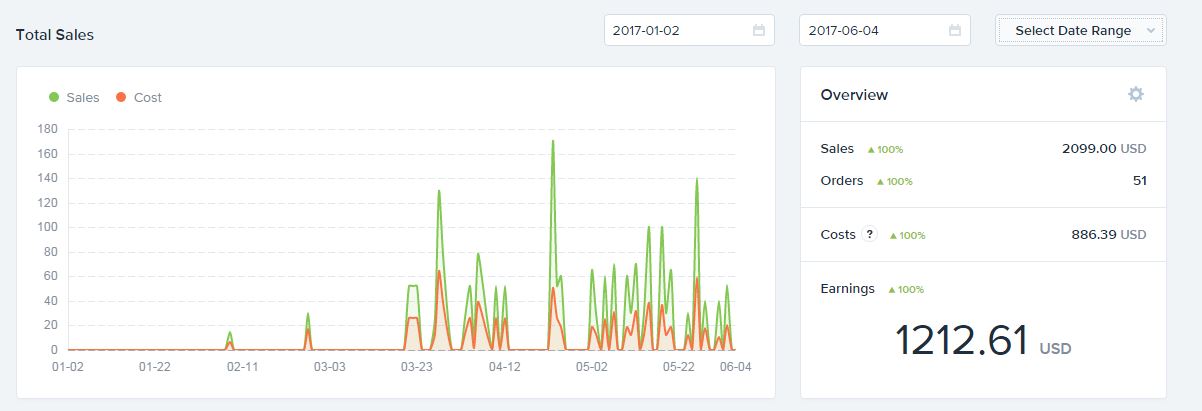
I did continue to run campaigns till February 2017. Then we switched to Shopify, we achieved 62 sales but I cannot keep up with the team due to this new work commitment. The guys decided to pause the e-commerce store and move on to continue their affiliate marketing business. They wanted full commitment to continue as we wanted to switch to a niche store. See below picture which was accomplished by one of my business partners/friends, he has achieved some results because he consistently takes more actions every single day.


I think I lack the grit and perseverance. I bought this book called "grit and perseverance". Let me see how can I improve on this aspect. It is my shortcoming.


Coming back to the portfolio, I was thinking of my present setup. This year composition is mainly a dividend play setup, 70% in dividend stocks and 30% in growth stocks. I am being too passive. On hindsight, if I have sold my shares on this particular counter and move them into another two counters with higher ROE, the return will have increased by 30% instead of waiting for a 5% dividend yield. Another finger pointing is because of work, I have no time to look into my stocks. All these are excuses and blame game.

I need to reconstruct my portfolio, taking a balanced approach for assets allocation. 

I will move into 40% on dividend stocks, 50% on growth stocks and 10% using options.

Sunday, 4 June 2017

04/06/2017 Recent update

Since the day I joined the new company to assist with the bid, I had been working till midnight almost every single day and even on weekend. Last night was the submission date for the first bid, we worked till midnight in the office and successfully submitted it online.

I finally have this afternoon to rest and reflect. I filed all my receipts, mails, and letters. It feels good to unclutter and get everything into my filing system to make things systematic. See below picture for four months of hard work from the team on our ecommerce store (my side business - another source of income). I was not able to contribute much due to my work commitment. I only worked on product fulfillment and customer services. We have not been able to achieve break even stage, the below figure does not include cost on Facebook marketing.

Figure 1 - Revenue from ecommerce store


In Mid May, I have cleared the mortgage and close to debt free. See below figure.


Figure 2 - Clear our mortgage
I could have deployed the money to generate higher returns and complete our quest to achieve financial freedom earlier but it was a family decision. Recently I completed reading a classic book "100 to 1 in the stock market", it is a good book and I learnt a lot from it. This has shaped a new investment approach. I am trying to formulate whether I should take a more "income" approach or "growth" approach. If the company gives out dividend instead of retained earnings, it will be slower to grow. You cannot have the cake and eat it. If the company has a lot of cash, achieves low return on equity and does not give out dividend, the shareholders are worst off. In Singapore context, I will prefer the company to give out the dividend as I do not see very brilliant business owners as compared to Thailand, Asia and USA. At this moment, I have 60% of my portfolio in "income" stocks and maybe I should rebalance to position 70% in growth stocks.

Recently, I saw a few posts on a Facebook group discussing a topic on "30 years old and have 100k". I believe everyone is a winner if they are able to achieve financial freedom at 30, 40, 50, 60 or 70 years old. This is your own journey, it is never a competition. I just need to achieve SGD 2 m in my portfolio and I will call it a day. My mentor wants a SGD 10 m milestone. It depends on your lifestyle and ultimately how much do you need. I just want to have the freedom to choose my own lifestyle.

I tabulate JC Fund account and in May the Fund has achieved SGD 920k (cash position) and the fund should be able to cross the SGD 1,000k mark by end of 2017.  

Friday, 19 May 2017

ThaiBev 1H17

Total sales revenue dropped by 8.4% to Baht 97,176 million. This is due to the decline in domestic consumption during mourning period. There is slight drop in net profit, the cost control lessen the effect of the mourning period to the bottom line, there is a decrease of 1.8% of net profit to Baht 14,322 million.

Beer sales revenue for 1st Half 2017 has decreased by 9.6% to 30,560 from 33,796. Non-alcoholic Beverages decreased by 2.3% from 8,373 to 8,181. Food has increased by 3% from 3,187 to 3,283. The beer revenue declined by 19.2% which is due to slowdown in ASEAN growth and International Spirits revenue declined by 22.3% due to weak sterling and Chinese spirits sales. Overall, growth is stalled.

Net interest bearing debt decreased from 41,026 in 30 Sep 16 to 38,640 in 31 Mar 17. Net Cash Flow from Operating Activities has decreased from 20,697,748 to 14,371,641. PPE increased and Free Cash Flow is still positive but decreased. Total cash equivalent 2,499,023 including 2018 cash flow from Operation and Financing if required should be able to cover for the 26,129 due by Mar 2018. Debt to Equity ratio for 31 Mar 17 has decreased to 0.48, if this can be decreased to 0.4 by end of the year will be good.

I believe the sales will pick up for 2H 2017. My intrinsic value for ThaiBev is at SGD 0.80, I will acquire near SGD 0.83-0.84. I need to acquire another 200k shares for this counter over the years.


Friday, 31 March 2017

Investment Commitments

I am reading my M5 textbook and I finally come across something which is useful. Ops.

The Know Your Client states that in order for a financial advisor to make a recommendation, he needs to understand the client's investment objectives, financial situation and particular needs. From there, the financial advisor needs to carefully curtail a plan for the client.

This brings me to Investment Commitment. Are you able to commit money to invest on a regular basis? If yes, then you can harness the advantage of dollar cost averaging. I had an unfair advantage because since 2009 onwards, I was the Constant Cashflow Investor. I have strong net income (in my context) which comes in on a monthly basis and I will use them to acquire financial assets. I have a high saving ratio as I live frugally. I am quite proud of how I allocate resources most of the time. Hence, it is possible for me to get out of a "bad" investment (temporary having paper loss), I can choose to continue to buy more and average down the cost. Using this approach, I have seldom lose money and able to either i) grow the portfolio by acquiring more or ii) take dividend while waiting for stock to rise back up and reinvest to compound it further.

I will soon become the second type of investor because there is no income from employment. This is the Lumpsum Investor. They do not have constant income and they rely on an one-time investment, park it there and forget about it. Then how should this type of investor plan the investment game? There are a lot of experts who will recommend going in based on stages. For instance, pump 20% first, if it drops another 10%, pump into another 20%, so on and so forth. However, will it be a concentrated move or diversified investment? This is a tough call. I will think that if you do not have a strong stock broker to work with or you do not good investment skills, just buy ETF. Stagger the lumpsum into the ETF and reinvest the dividend. You should be able to get above average returns. Does this mean I will go into ETF? Yes, if I cannot get above average returns. Alternatively, I will use ETF to invest in countries such as Russia and China. 

Now I am going back to my studies, continue reading page 63 of 519. What a way to spend my Friday evening.

Thursday, 30 March 2017

Switching Works!

Recall from my previous Post that I made a major position switching. I sold 20 lots of OCBC at an approximate loss of SGD 9,200 excluding brokerage fees. I took the sum of money and went into stock M. If you follow Hong Kong stock, you will be able to decipher which counter it is. I bought a total of 26 lots in stock M.

On 22nd March 2017, I sold 5 lots as I need to set aside some money for my remaining lumpsum mortgage loan payment.  On 30th March 2017, I sold another 5 lots at 43.85 and 9 lots at 43.9, this is an one-off example that instead of holding on a stock which is losing money, you can cut loss and switch to another stock which can be either:

1) undervalued
2) special situation trade
3) dividend play


The breakeven point for the switching move which I estimated was at about $42, for the 14 lots (those sold on 30/3/2017) which are about $2 higher than the break even point, I consider that as I had already pocketed the equivalent to the special dividend amount. The special dividend will only be issued on 19th May for $2.2 and normal dividend for $0.8. For information, this counter is currently overvalued.

Currently, this move is already profitable and I have covered my previous losses. Before I sold any of stock M, I have 33 lots. I will let the remaining 14 lots continue to run and see whether it will break through its major resistance. When it is closer to May, I will pare down the remaining 14 lots. Whether I will sell 10 lots and keep 4 lots or sell all will be decided later. 

After the sell down, I will switch to another Hong Kong counter. My current HK portfolio is about half a million worth of SGD, HKD is taking a hit recently with the noises in USA due to Trump. I am confident US economy will continue to strengthen and dollars will continue to go up. 

12/4/2017 Update
Recently there are geopolitical tensions in the region. I have not seen any opportunity to acquire more shares yet. I sold another 4 lots of stock M at $44.70 and I am left with 10 lots.

Recently, I am reading a few new books and revisit some of the old books while traveling on train to work. I need to revise my strategy after discussing with my mentor.


Till date, net gain about SGD $9k.  

20/4/2017
I started my new role and decided to cash out a I did not want to look at stocks during office working hours.


After selling my holdings in stock M. I decided to shift the money to buy one US stock. The only good thing from this move is I have recovered my capital (excluding the dividend from OCBC) and I am able to shift the funds to other stock counter.

This is the only single counter which I am shifting, the rest of the portfolio remains untouched. I will just hold and wait.

I always believe in fully invested.

 *Past performance does not guarantee future results

Saturday, 4 March 2017

92 Quotes from The Most Important Thing by Howard Marks

Courtesy from 
http://www.arborinvestmentplanner.com/quotes-the-most-important-thing-howard-marks/

92 Quotes From The Most Important Thing

“Successful investing requires thoughtful attention to many separate aspects, all at the same time. Omit any one and the result is likely to be less than satisfactory. (ix)
To me, risk is the most interesting, challenging and essential aspect of investing. (x)
No rule always works, the environment isn’t controllable, and circumstances rarely repeat exactly. Psychology plays a major role in markets, and because it’s highly variable, cause-and-effect relationships aren’t reliable. (1)
First-level thinkers look for simple formulas and easy answers. Second-level thinkers know that success in investing is the antithesis of simple. (4)
You can’t do the same things others do and expect to outperform. (5)
Most people are driven by greed, fear, envy, and other emotions that render objectivity impossible and open the door for significant mistakes. (12)
Inefficient markets do not necessarily give the participants generous returns. Rather, in my view that they provide the raw materials — mispricings — that can allow some people to win and others to lose on the basis of differential skill. (13)
Let others believe markets can never be beat. Abstention on the part of those who won’t venture in creates opportunities for those who will. (14)
The choice isn’t really between value and growth, but between value today and value tomorrow. Growth investing represents a bet on company performance that may or may not materialize in the future, while value investing is based primarily on analysis of a company’s current wealth. (19-20)
Investors with no knowledge of (or concern for) profits, dividends, valuation, or the conduct of business simply cannot possess the resolve needed to do the right thing at the right time. (22)
Establishing a healthy relationship between fundamentals — value — and price is at the core of successful investing. (24)
Bottom Line: there’s no such thing as a good or bad idea regardless of price! (25)
Investor psychology can cause a security to be priced just about anywhere in the short run, regardless of its fundamentals. (27)
Investing is a popularity contest, and the most dangerous thing is to buy something at the peak of its popularity.  (27)
The safest and most potentially profitable thing is to buy something when no one likes it.  (27)
All bubbles start with some nugget of truth.  (28)
Unfortunately, the greater fool theory only works until it doesn’t. Valuation eventually comes into play, and those who are holding the bag when it does have to face the music. (28)
Risk means more things can happen than will happen. (31)
The possibility of permanent loss is the risk I worry about. (36)
Skillful investors can get a sense for the risk present in a given situation. They make that judgement based on (a) the stability and dependability of value and (b) the relationship between price and value.   (39)
Return alone—and especially return over short periods of time—says very little about the quality of investment decisions. (44)
Recognizing risk often starts with understanding when investors are paying it too little heed.  (46)
The value investor thinks of high risk and low prospective returns as nothing but two sides of the same coin, both stemming primarily from high prices. (47)
Awareness of the relationship between price and value—whether for a single security or an entire market — is an essential component of dealing successfully with risk. (47)
So a prime element in risk creation is a belief that risk is low, perhaps even gone altogether. That belief drives up prices and leads to the embrace of risky actions despite the lowness of prospective returns. (48)
The degree of risk present in a market derives from the behavior of the participants, not from securities, strategies, and institutions. (49)
The risk-is-gone myth is one of the most dangerous sources of risk, and a major contributor  to any bubble. (49)
When worry is in short supply, risky borrowers and questionable schemes will have easy access to capital, and the financial system will become precarious.  (50)
Too much money will chase the risky and the new, driving up asset prices and driving down prospective returns and safety. (50)
Investment risk comes primarily from too-high prices, and too-high prices often come from excessive optimism and inadequate skepticism and risk aversion. (50)
When everyone believes something is risky, their unwillingness to buy usually reduces the price to the point where it’s not risky. (55)
When everyone believes something embodies no risk, they usually bid it up to the point where it’s enormously risky. (56)
High quality assets can be risky, and low quality assets can be safe. It’s just a matter of the price paid for them. (56)
Risk control is the best route to loss avoidance. Risk avoidance, on the other hand, is likely to lead to return avoidance as well. (65)
The road to long-term investment success runs through risk control more than through aggressiveness. (66)
Most investors’ results will be determined more by how many losers they have, and how bad they are, than by the greatness of their winners. (66)
Skillful risk control is the mark of the superior investor. (660
You can’t predict. You can Prepare. (67)
Most things prove to be cyclical. (67)
Cycles will never stop occurring. If there were such a thing as a completely efficient market, and if people really made decisions in a calculating and unemotional manner, perhaps cycles (or at least their extremes) would be banished. But that’ll never be the case. (71)
When investors in general are too risk-tolerant, security prices can embody more risk than they do return. When investors are too risk-adverse, prices can offer more return than risk. (75)
The biggest investing errors come not from factors that are informational or analytical, but from those that are psychological. (80)
There’s only one way to describe most investors: trend followers. Superior investors are the exact opposite. (91)
The proper response lies in contrarian behavior: buy when they hate ‘em, and sell when they love ‘em.  (93)
Investment success requires sticking with position made uncomfortable by their variance with popular opinion. (94)
The ultimately most profitable investment actions are by definition contrarian: you’re buying when everyone else is selling (and the price is thus low) or you’re selling when everyone else is buying (and price is high).  (95)
The thing I find most interesting about investing is how paradoxical it is: how often the things that seem most obvious—on which everyone agrees—turn out not to be true. (95)
What’s clear to the broad consensus of investors is almost always wrong. (95)
The very coalescing of popular opinion behind an investment tends to eliminate its profit potential. (95)
If everyone likes it, there’s significant risk that prices will fall if the crowd changes its collective mind and moves for the exit. (96)
Large amounts of money aren’t made by buying what everybody likes. They’re made by buying what everybody underestimates. (96)
In dealing with the future, we must think about two things: (a) what might happen and (b) the probability that it will happen. (97)
Following the beliefs of the herd will give you average performance in the long run and can get you killed at the extremes. (97)
The error is clear. The herd applies optimism at the top and pessimism at the bottom. (98)
It’s not what you buy; it’s what you pay for it. (102)
A high quality asset can constitute a good or bad buy, and a low quality asset can constitute a good or bad buy. (102)
The necessary condition for the existence of bargains is that perception has to be considerably worse that reality. (105)
It’s essential for investment success that we recognize the condition of the market and decide on our actions accordingly. (108)
One way to be selective is by making every effort to ascertain whether we’re in a low return environment or a high-return environment. (110)
When prices are high, it’s inescapable that prospective returns are low (and risks are high).  (111)
You want to take risk when others are fleeing from it, not when they’re competing with you to do so. (113)
High-return environments offer opportunities for generous returns through purchases at low prices, and typically these can be earned with low risk. (113)
Patient opportunism, buttressed by a contrarian attitude and strong balance sheet, can yield amazing profits during meltdowns. (115)
There are two kinds of people who lose money: those who know nothing and those who know everything. (116)
We  may never know where we’re going, but we’d better have a good idea where we are…..and act accordingly. (125)
Randomness contributes to (or wrecks) investment records to a degree that few people appreciate fully. As a result, the dangers that lurk in thus-far-successful strategies often are underrated. (135)
The correctness of a decision can’t be judged from the outcome. (136)
Several things go together for those who view the world as an uncertain place: healthy respect for risk; awareness that we don’t know what the future holds; an understanding that the best we can do is view the future as a probability distribution and invest accordingly; insistence on defensive investing; and emphasis on avoiding pitfalls. To me that is what thoughtful investing is all about.  (140)
You can’t simultaneously go all out for both profit making and loss avoidance. Each investor has to take a position regarding these goals, and usually that requires striking a reasonable balance.  (141)
The bottom line is that even highly skilled investors can be guilty of mis-hits, and the overaggressive shot can easily lose them the match. Thus, defense — significant emphasis on keeping things from going wrong — is an important part of every investor’s game. (143)
Defense actually can be seen as an attempt at higher returns, but more through the avoidance of minuses than through the inclusion of pluses, and more through consistent but perhaps moderate progress than through occasional flashes of brilliance. (145)
There are two principal elements in investment defense. The first is the exclusion of losers from portfolios. The second element is the avoidance of poor years and, especially, exposure to meltdown in crashes. (145)
Investment defense requires thoughtful diversification, limits on the overall riskiness borne, and a general tilt toward safety. (146)
Low price is the ultimate source of margin for error. (147)
I believe in many cases, the avoidance of losses and terrible years is more easily achieved than repeated greatness, and thus risk control is more likely to create a solid foundation for a superior long-term track record. (151)
Investing scared, requiring good value and a substantial margin for error, and being conscious of what you don’t know and can’t control are hallmarks of the best investors I know. (151)
A portfolio that contains too little risk can make you underperform in a bull market, but no one ever went bust from that; there are far worse fates. (153)
This book is more about philosophy and mind-set than it is about analytical processes. (154)
Extremes in cycles and trends don’t occur often, and thus they’re not a frequent source of error, but they give rise to the largest errors. (154)
The power of herd psychology to compel conformity and capitulation is nearly irresistible, making it essential that investors resist them. (154)
At important turning points, when the future stops, being like the past, extrapolation fails and large amounts of money are either lost or not made. (155)
Understanding and anticipating the power of correlation — and thus the limitations of diversification — is a principal aspect of risk control and portfolio management. (156)
The failure to correctly anticipate co-movement within a portfolio is a critical source of investment error.
When capital is in oversupply investors compete for deals by accepting low returns and a slender margin of error. (159)
Bidding more for something is the same as saying you’ll take less for your money. (160)
The best defense against loss is thorough, insightful analysis and insistence on what Warren Buffett calls “margin for error”. (160)
Leverage magnifies outcomes but doesn’t add value. (161)
Asymmetry — better performance on the upside than on the downside relative to what your style alone would produce — should be every investor’s goal. (172)
To achieve superior investment results, your insight into value has to be superior. Thus you must learn things others don’t, see things differently or do a better job of analyzing them — ideally, all three. (173)
The relationship between price and value hold the ultimate key to investment success. (174)
Because of differences in correlation, individual investments of the same absolute riskiness can be combined in different ways to form portfolios with widely varying total risk levels. (177)
A diversified portfolio of investments, each of which  is unlikely to produce significant loss, is a good start toward investment success.” (177)

Latest Post

We have moved!

We have moved to a new website: www.jcprojectfreedom.com Visit us there!